Aug 12, 2026
How to Choose a Smart Relay Module: WiFi vs Zigbee vs RF433
A buyer's guide to selecting WiFi, Zigbee or RF433 smart relay modules by wiring, load, channel count, gateway needs, automation and OEM requirements.
How to Choose a Smart Relay Module: WiFi vs Zigbee vs RF433
Smart relay modules turn conventional switches, lights, motors and appliances into connected devices. For importers, distributors and project integrators, the correct choice depends on more than protocol alone. Wiring, load type, channel count, installation space, gateway requirements and target-market certification all affect the final product plan.
What Is a Smart Relay Module?
A smart relay module is installed behind a wall switch, inside a junction box or in a distribution cabinet. It switches electrical loads while adding app control, schedules, scenes, voice control and automation. Depending on the model, it can control lighting, curtains, pumps, heaters and other equipment.
WiFi Smart Relay Modules
WiFi models connect directly to a 2.4 GHz router and normally do not require a gateway. They are easy for retail customers to understand and are suitable for individual devices or small installations. Buyers should evaluate router capacity, signal coverage, standby power and cloud-platform requirements when many devices will be installed together.
Best for:
• Retail smart-home products
• Small apartments and retrofit projects
• Applications where a gateway is undesirable
• Direct app and voice control
Zigbee Smart Relay Modules
Zigbee products require a compatible gateway, but they create a low-power mesh network and are often better for multi-device systems. They can provide faster local automation and reduce the number of devices connected directly to the WiFi router. Gateway compatibility and ecosystem testing are essential for an OEM project.
Best for:
• Whole-home automation
• Hotels, apartments and project installations
• Systems with many switches and sensors
• Local scenes and coordinated device control
RF433 Relay Modules
RF433 is commonly used for simple wireless remote control. It offers good penetration and can work with battery-powered or self-powered wall switches without depending on WiFi. RF433 does not by itself provide cloud control, so some projects combine it with WiFi or Zigbee for both local remote switching and app access.
Best for:
• Self-powered wireless switches
• Renovation projects with limited control wiring
• Simple long-range remote control
• Backup local switching
Key Specifications Buyers Should Confirm
- Input voltage and frequency Confirm whether the target market requires 100–120 V or 220–240 V and whether 50 Hz, 60 Hz or both are supported.
- Maximum load and load type A relay rating for resistive loads may not apply equally to LED drivers, motors or capacitive loads. Request load-specific test data.
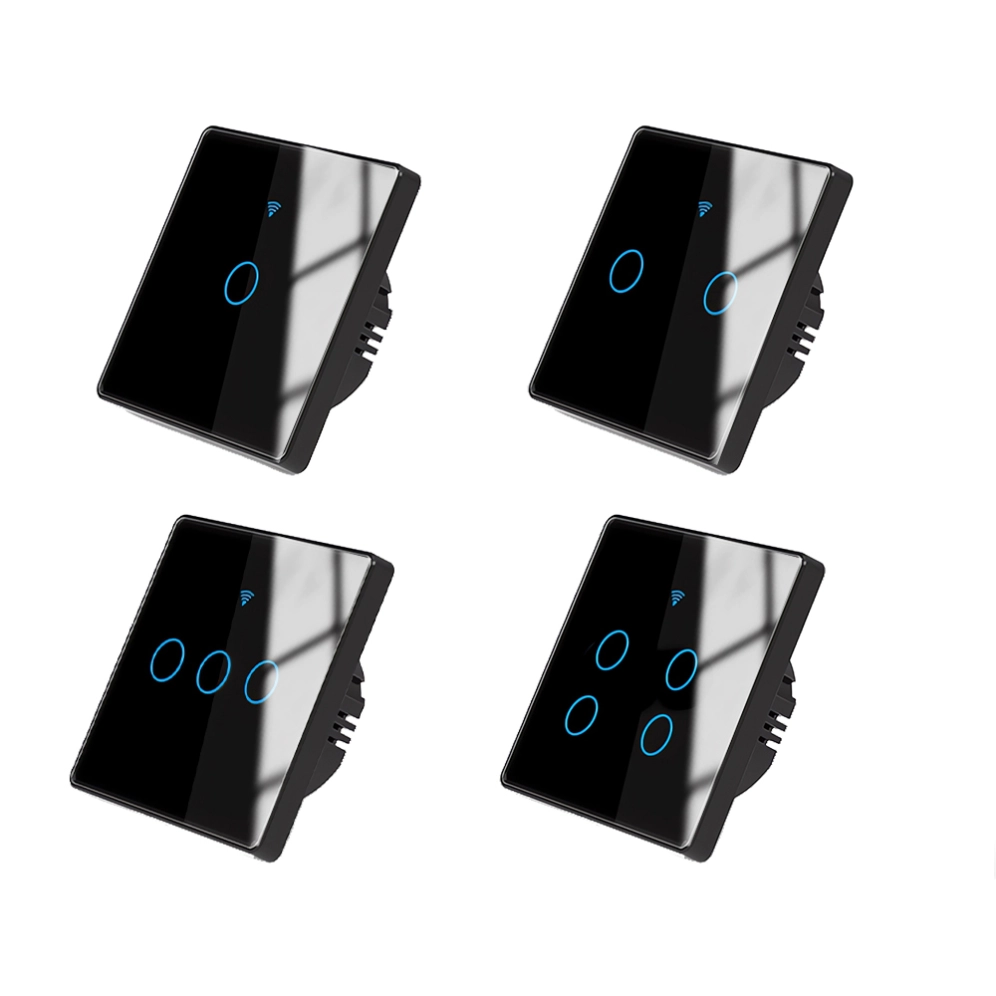
- Channel count Single-, two-, three- and four-channel modules serve different applications. Check whether channels can be controlled independently.
- Neutral-wire requirement Some installations have a neutral wire in the switch box and others do not. Confirm the wiring diagram before choosing the product.
- Module dimensions Measure the wall box or cabinet space, including room for terminals and wiring bends. Compact size can be critical in retrofit projects.
- Control functions Specify schedules, countdown timers, inching mode, interlock, two-way control, power-on state, energy monitoring and offline behavior.
- Platform and voice integration Confirm app branding, Tuya or other platform requirements, Alexa and Google Home support, account region and cloud service terms.
- Certification and documentation Plan certification for the target market early. Required documents may include CE, RoHS, UKCA, FCC, ETL or other regional approvals depending on product and destination.
OEM and ODM Checklist
Before requesting a quotation, provide:
• Destination country and voltage
• Protocol preference: WiFi, Zigbee or RF433
• Load type and maximum current
• Required channel count
• Neutral or no-neutral wiring
• App, logo and packaging requirements
• Estimated quantity and annual forecast
• Certification requirements
• Sample and delivery schedule
Which Protocol Should You Choose?
Choose WiFi for simple direct-to-router products, Zigbee for scalable multi-device systems, and RF433 for straightforward wireless remote control. Hybrid products can combine protocols when a project needs app access plus reliable local switching.
LakiSmart supplies WiFi, Zigbee and RF433 smart relay and circuit-control modules for OEM, ODM, wholesale and project requirements. Explore the Smart Relay Module Series at /products/lakismart-wifi-zigbee-rf433-smart-relay-module-series or contact us with your voltage, load, channel and quantity requirements for a quotation.